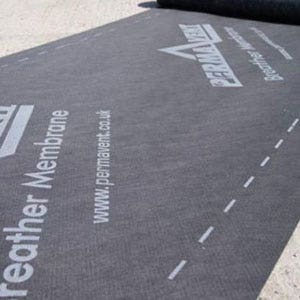
Breathable Membranes

What Is a Breathable Roofing Membrane?

Breathable membranes are thin, flexible underlays installed beneath roof coverings and over the rafters or sheathing. They are vapour-permeable yet water-resistant — the membrane’s micro-pores allow water vapour to escape from the roof space while keeping out wind-driven rain and snow.

By releasing trapped moisture, breathable felts reduce the risk of condensation, damp and mould, helping to preserve the structural timbers. They also support the performance of roof insulation, improving overall energy efficiency and extending the life of the roof.

How Do Breathable Membranes Work?

Modern breathable underlays are typically three-layer composites made from non-woven polypropylene with a breathable microporous film sandwiched between outer protective layers. The middle film provides high vapour permeability while forming a barrier to liquid water, and the outer layers give strength and resistance to tearing.

Some membranes include UV-resistant coatings to protect during installation and are engineered for specific exposure periods. High-performance ranges combine triple-layer construction with exceptional breathability, robust weather resistance and easy installation. Others are lightweight yet provide strong water resistance and are simple to handle on site.

Choosing the Right Membrane (GSM & Types)

Breathable felts are graded by GSM (grams per square metre), which reflects their weight and durability:

  • 100–120 gsm (lightweight) — ideal for sheltered domestic roofs, garages and extensions.

  • 130–160 gsm (mid-weight) — offers greater tear resistance and is suitable for moderate exposure or complex roof shapes.

  • 160 gsm and above (heavy-duty) — designed for high-wind zones, commercial buildings and open countryside.

In addition to GSM, consider whether you need a vapour-permeable or air- and vapour-permeable underlay. Air-permeable membranes can reduce the need for additional ventilation in heritage or sealed roof structures and help balance air pressure across the roof.

Benefits of Breathable Roofing Membranes

A high-quality breathable underlay provides multiple advantages:

  • Moisture management – Allows vapour to escape from the roof space, reducing condensation and preventing rot.

  • Secondary weatherproofing – Multi-layer membranes resist wind and rain, acting as a temporary barrier if tiles or slates are displaced.

  • Improved energy efficiency – Keeps insulation dry and effective, reducing heat loss and energy bills.

  • Ease of handling – Lightweight, flexible and easy to cut, with reinforced layers that improve strength and simplify installation.

  • Durability and sustainability – Long-lasting and recyclable, most modern membranes are CE and UKCA certified for safety and compliance.

Regulations and Standards

Breathable membranes for pitched roofs in the UK should comply with BS EN 13859-1, which defines performance standards for flexible sheets, and BS 5250:2021, the code of practice for moisture control in buildings.

Underlays are typically classified as W1 for water tightness under EN 1928. Many products also feature fire ratings, UV exposure limits, and UKCA or CE marking. When specifying a membrane, ensure it meets these standards and follow both manufacturer and BS 5534 guidance for pitched roofing work.

Installation & Best Practice

Breathable membranes are usually laid horizontally, starting at the eaves and working upwards. Each course should overlap the one below by at least 100 mm horizontally and 150 mm at joints or ridges.

The felt should be fixed to rafters or deck with nails or staples and pulled taut without sagging. Seal all laps and penetrations using the manufacturer’s tapes and accessories to maintain water tightness.

On products with different coloured faces, the darker or printed side generally faces upwards to provide greater UV resistance. Although breathable underlays reduce reliance on roof ventilation, most pitched roofs still require eaves and ridge ventilation to comply with building regulations and manage residual moisture.

Why Buy Breathable Membranes from JJ Roofing Supplies?

  • Comprehensive range: We stock leading brands such as Cromar, Permavent, Klober and Easy-Trim, with rolls available in various widths and weights for all roofing applications.

  • Quality assured: All our membranes are CE/UKCA marked and meet British standards for water tightness and vapour permeability.

  • Competitive pricing: Take advantage of bulk discounts, trade accounts, same-day collection and fast nationwide delivery.

  • Expert advice: Our experienced roofing specialists can help you choose the right GSM and type of membrane for your project, ensuring compliance and long-term performance.

FAQs

1. What is the difference between breathable and non-breathable roofing felt?
Non-breathable felt acts as a complete barrier and requires ventilation below to prevent condensation. Breathable membranes contain a microporous film that allows moisture vapour to escape while still repelling water.

2. Do I still need ventilation when using a breathable membrane?
Breathable membranes greatly reduce condensation risk, but most roofs still require some ventilation at the eaves and ridge to meet building regulations and manage residual moisture.

3. How long will a breathable membrane last?
When properly installed and protected by the roof covering, breathable membranes can last for several decades. Their lifespan may be reduced by prolonged UV exposure, incorrect fixing or mechanical damage, so always follow the manufacturer’s instructions.

4. What weight of membrane should I choose?
Lightweight membranes (100–120 gsm) suit sheltered domestic roofs, mid-weight options (130–160 gsm) are ideal for standard homes and extensions, and heavy-duty membranes (160 gsm+) are best for exposed or commercial settings.

5. Which way up do I lay a breathable membrane?
Most membranes have a printed or darker side that should face upwards during installation. This side offers better UV resistance. However, since most are vapour-open on both sides, performance is not significantly affected if installed the other way up.

Showing 1-12 of 38

Filter By
View as Grid List

Showing 1-12 of 38

Set Descending Direction

Products

Page
per page